
A small living room can be just as comfortable and inviting as a larger one. The challenge is finding the right balance between furniture, storage, and the little details that make a space feel like home. Too much furniture can make the room feel crowded, while too little can leave it looking unfinished. The good news is that thoughtful choices can make a real difference. These Small living room ideas focus on simple layouts, natural textures, soft colors, and practical decorating choices that work in everyday homes. Whether you live in a compact apartment in the USA, a small UK terrace, an Australian unit, or a Canadian condo, you can create a living room that feels open, organized, and personal without spending a fortune.
Table of Contents
- Choose a Light and Natural Color Palette
- Plan a Layout That Leaves Room to Move
- Pick Furniture That Fits the Room
- Use Mirrors to Reflect Natural Light
- Make the Most of Vertical Storage
- Decorate Beautifully Without Overspending
- Create a Cozy Living Room with Soft Textures
- Arrange Your TV Without Crowding the Room
- Make a Small Apartment Feel More Spacious
- Add a Reading Nook in an Unused Corner
- Keep Clutter Under Control
- Bring in Plants and Natural Details
- Use Lighting to Create a Relaxed Atmosphere
- Choose Curtains That Make the Room Feel Taller
- Personalize the Space with a Few Meaningful Details
- Make Your Small Living Room Work for You
1. Choose a Light and Natural Color Palette
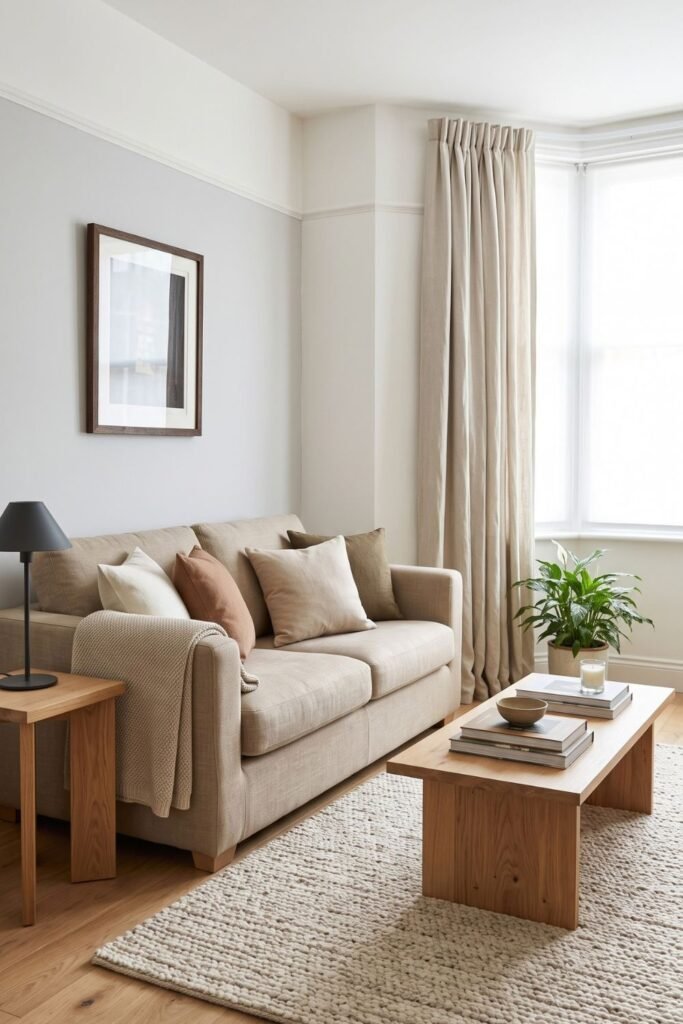
One of the easiest Small living room ideas is to begin with a calm color palette. Warm white, soft beige, pale gray, and gentle earthy shades help a room feel brighter and more open. These colors reflect natural light and create a relaxed backdrop for furniture and accessories.
You do not need to make everything white. Add warmth with oak furniture, linen curtains, cream cushions, or a woven rug. A few darker accents, such as a wooden picture frame or a charcoal lamp, can give the room depth without making it feel heavy.
Read More : Kitchen Ideas for Small Kitchens: Modern, Practical & Stylish Ideas for Your Home
2. Plan a Layout That Leaves Room to Move
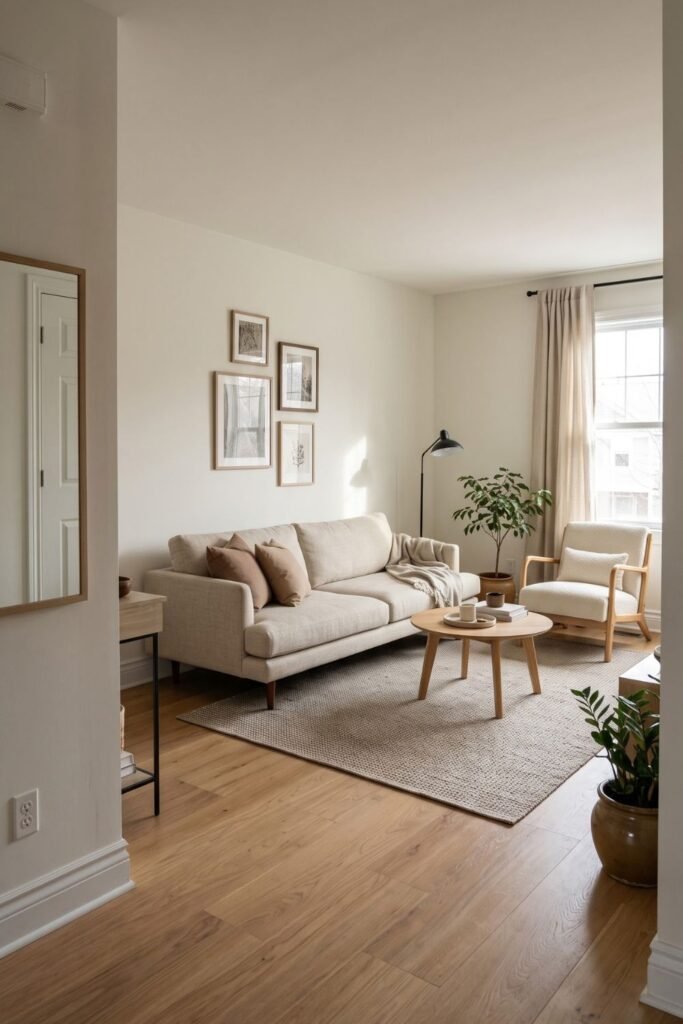
Good Small living room layout ideas begin with how you use the room each day. Before moving furniture, consider where people enter, where they walk, and where they naturally sit. Avoid placing large pieces in the main walking path, and leave enough space to move comfortably between the sofa, coffee table, and doorway.
Try positioning the sofa against the longest wall when it makes sense for your room. Place an accent chair in an unused corner instead of adding several bulky seats. A clear path and an uncluttered floor can make even a compact living area feel more comfortable.
Read More : Small Apartment Organization: Smart Storage Ideas That Actually Work
3. Pick Furniture That Fits the Room
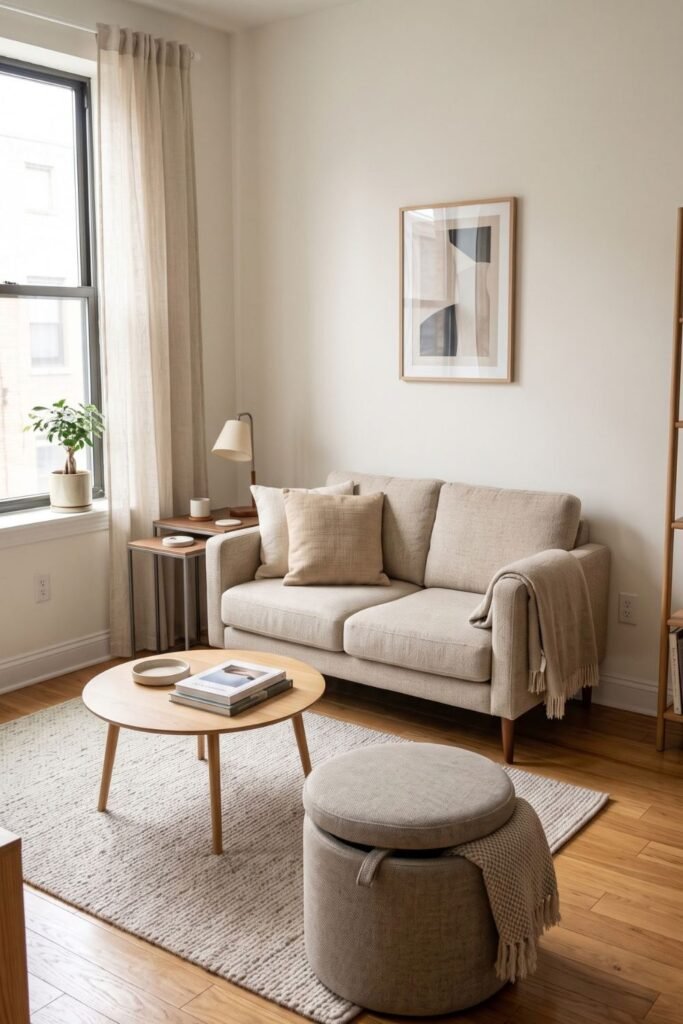
When exploring Small living room furniture ideas, look for pieces that suit the scale of your space. A compact sofa with raised legs can feel lighter than a deep, bulky design that sits directly on the floor. Slim side tables and nesting tables provide useful surfaces without taking up too much room.
Choose furniture that serves a clear purpose. A storage ottoman can work as a footrest, extra seating, and a place to keep blankets. A small round coffee table can also make movement easier around the seating area because it has no sharp corners.
4. Use Mirrors to Reflect Natural Light
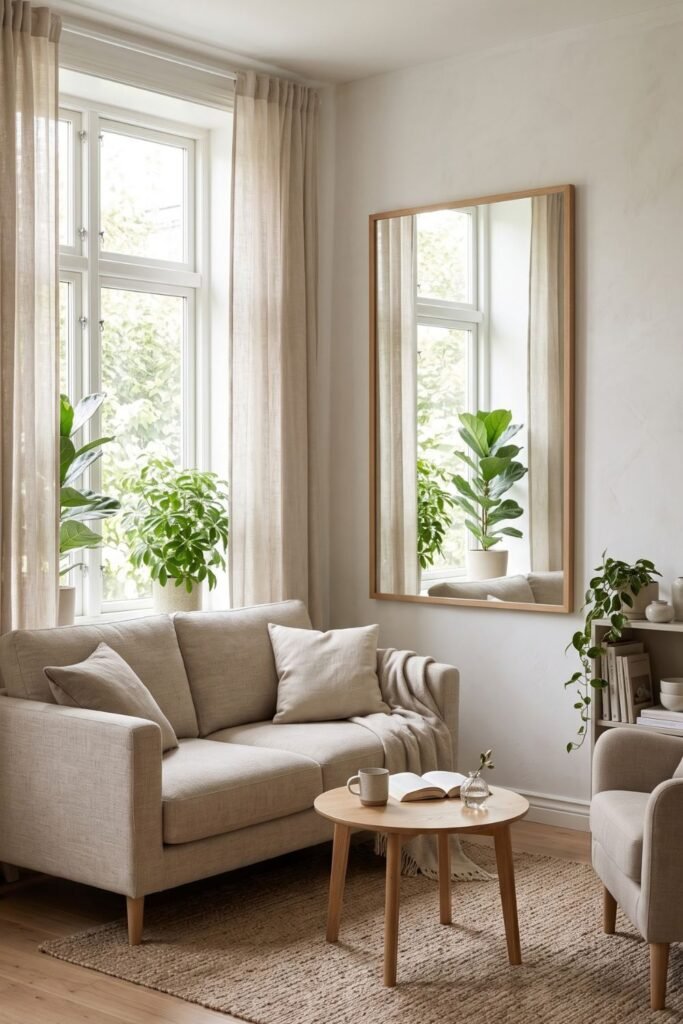
If you are wondering How to make a small living room look bigger, consider adding a mirror opposite or beside a window. It can reflect daylight into darker parts of the room and create a greater sense of depth. A large mirror with a simple wooden frame also works as a decorative feature.
Pay attention to what the mirror reflects. Position it to capture a window, a leafy plant, or an attractive part of the room rather than a cluttered shelf. Even a modest mirror can help brighten a dim corner when it is placed thoughtfully.
5. Make the Most of Vertical Storage
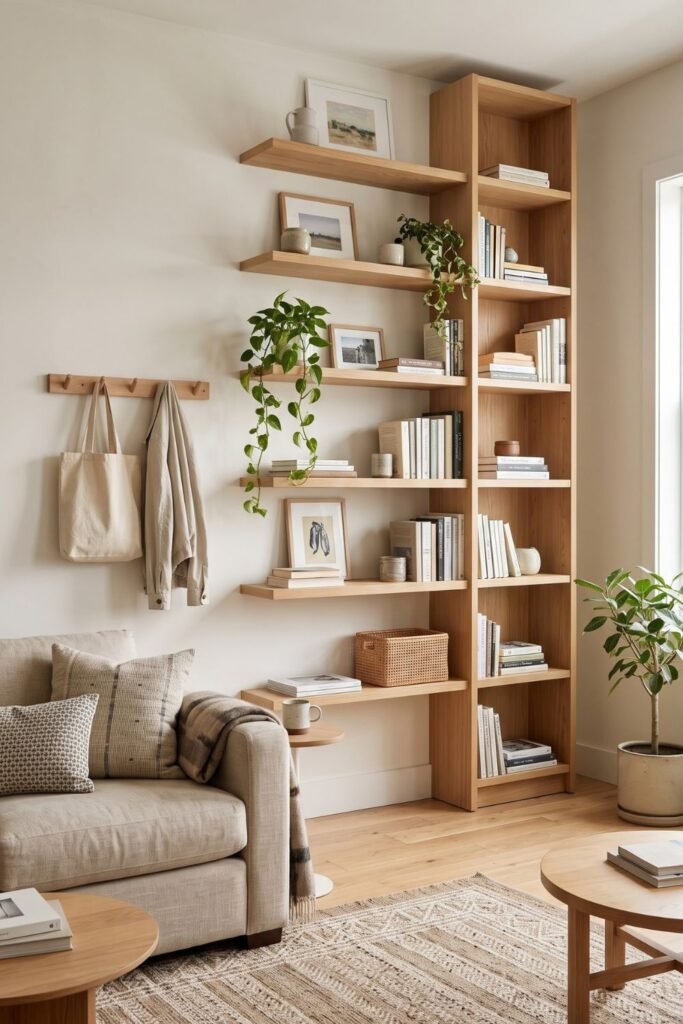
Smart Small living room storage ideas are not limited to cabinets and baskets. Your walls can provide valuable storage without using up floor space. Floating shelves, narrow bookcases, and wall mounted cabinets keep everyday items organized while leaving more room for movement.
Arrange books, small framed prints, and a few decorative objects on open shelves. Keep some sections empty so the display feels relaxed rather than crowded. In a rented home, removable hooks and carefully planned freestanding shelving can offer practical alternatives when permanent installation is not possible.
Read More : Kitchen Ideas for Small Kitchens: Modern, Practical & Stylish Ideas for Your Home
6. Decorate Beautifully Without Overspending
Small living room decorating ideas on a budget often begin with using what you already own. Rearrange your cushions, move a lamp from another room, or create a small display with books and a ceramic vase. These changes can refresh your space without requiring new furniture.
When you do shop, look for affordable natural materials and versatile pieces. Cotton cushion covers, secondhand wooden tables, woven baskets, and simple curtains can bring warmth to a room. Choose a few items that work together instead of buying lots of accessories that compete for attention.
7. Create a Cozy Living Room with Soft Textures
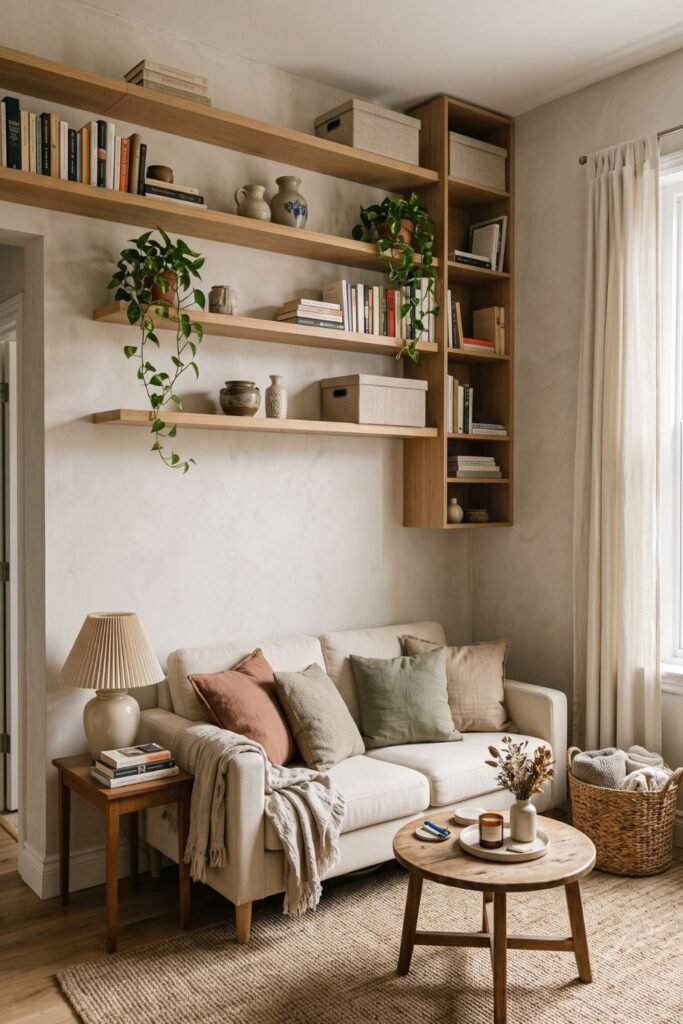
Some of the most welcoming Small living room ideas rely on texture rather than extra decoration. A soft rug, linen cushions, a knitted throw, and curtains that fall gently to the floor can make a compact room feel comfortable and layered.
Keep the colors connected so the different materials work together. For example, combine a beige sofa with cream cushions, a natural fiber rug, and warm wooden accents. Add a table lamp for soft evening light. The room will feel inviting without needing lots of decorative objects.
8. Arrange Your TV Without Crowding the Room
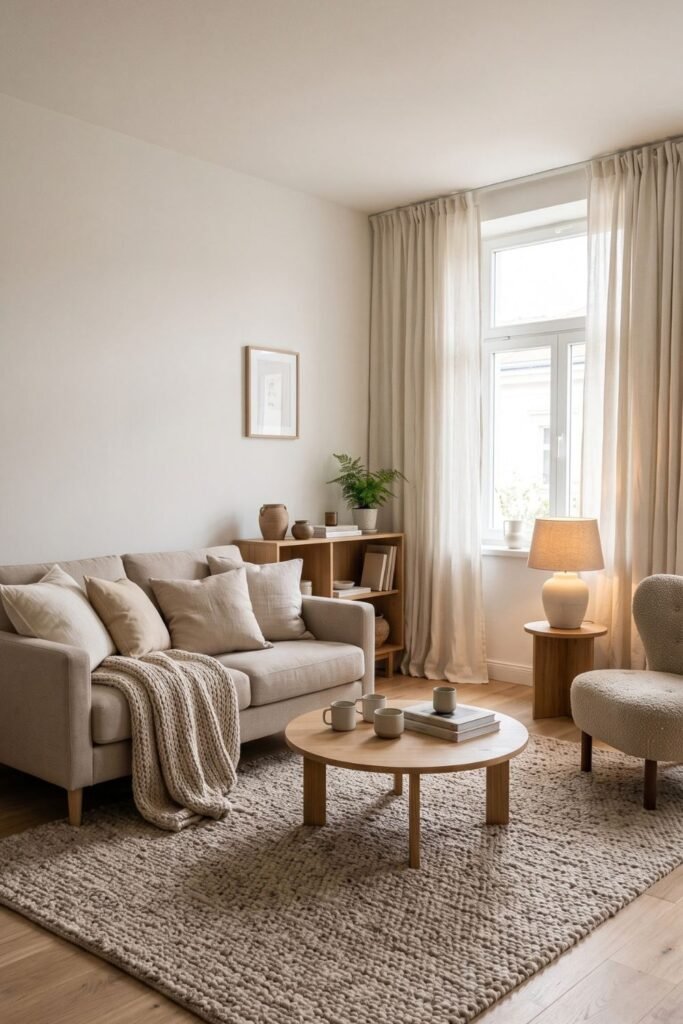
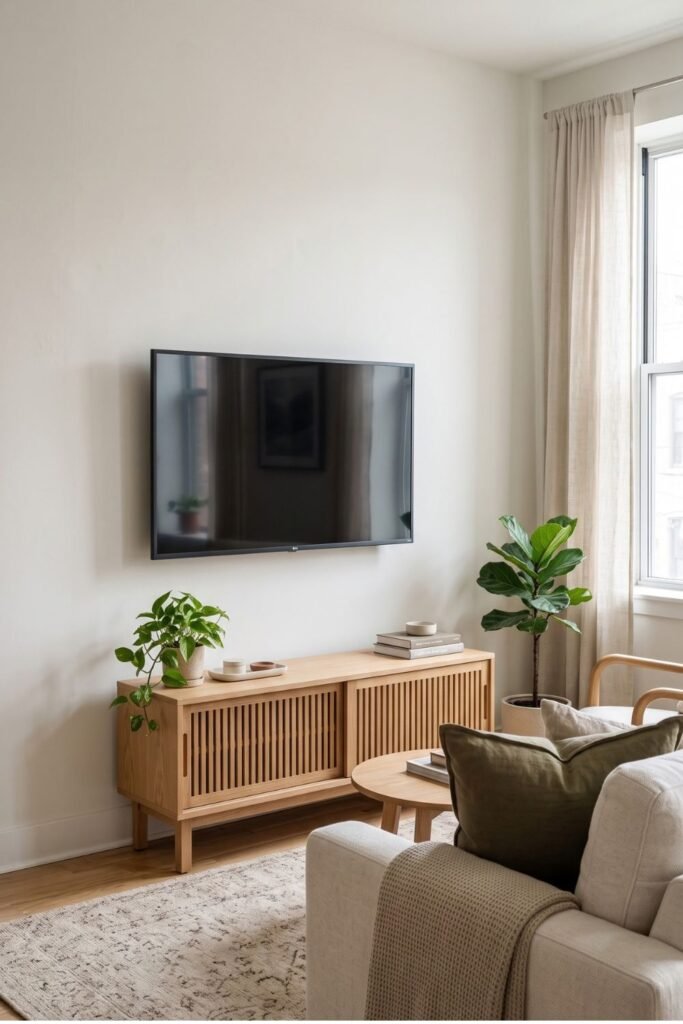
Small living room ideas with TV work best when the television fits naturally into the overall layout. A wall mounted screen can free up space on the floor, while a narrow media console provides room for essential devices and a few neatly arranged items.
If you prefer a freestanding television, choose a compact unit with closed storage to hide cables and accessories. Avoid surrounding the screen with too many decorative objects. A simple arrangement with one plant or a small stack of books can keep the area looking tidy and balanced.
Read More : Fridge Organization Ideas: How to Organize a Fridge and Maximize Storage
9. Make a Small Apartment Feel More Spacious
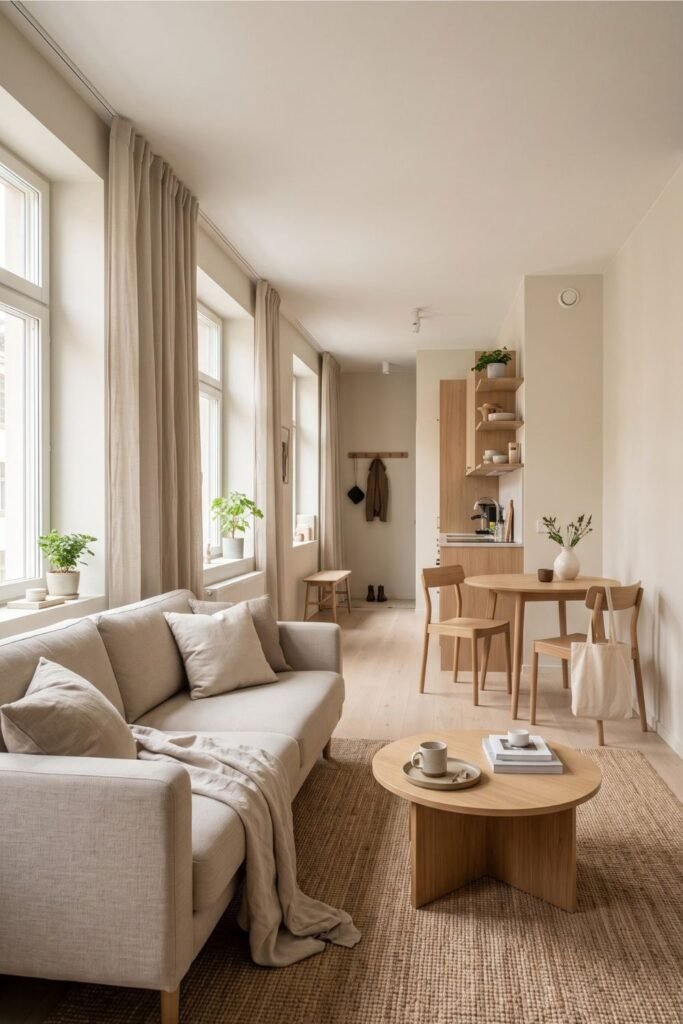
Small apartment living room ideas should consider how the living area connects with the kitchen, dining space, or entryway. When rooms share an open plan, use a rug, a sofa, or a small dining table to define each area without building physical barriers.
Try to keep the main sightlines clear. Low furniture and curtains in a similar tone to the walls can help the space feel more connected. If you need a dining area, a compact round table or a foldable design can provide flexibility without permanently taking over the living room.
10. Add a Reading Nook in an Unused Corner
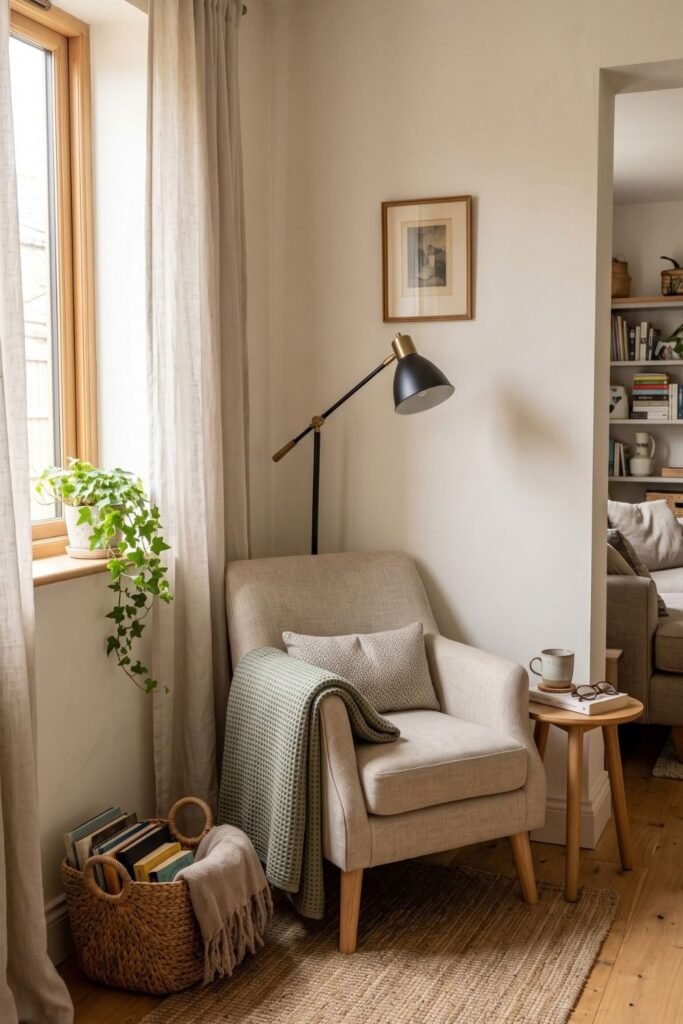
Small living room ideas with a reading nook can make an overlooked corner feel useful and personal. A compact armchair, a small side table, and a floor lamp may be all you need. Place the chair near a window if possible, where natural light makes reading more comfortable during the day.
Keep a basket nearby for books and a soft throw. If there is not enough room for another chair, create a reading spot at one end of the sofa with a comfortable cushion and an adjustable lamp. The goal is to make a quiet place to unwind without overcrowding the room.
11. Keep Clutter Under Control
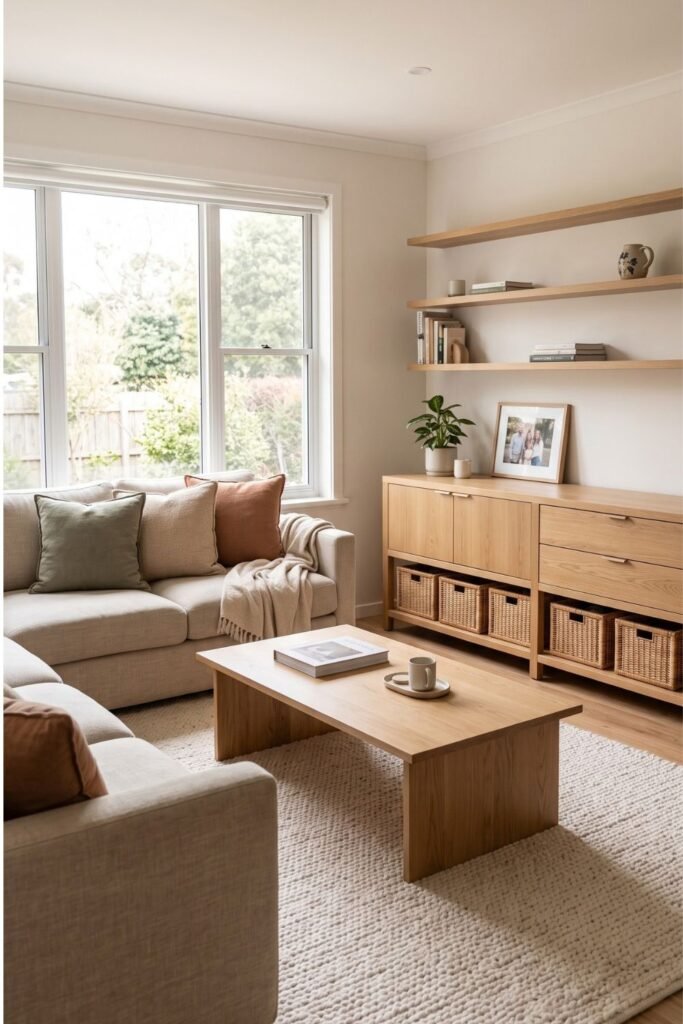
A tidy room often feels larger because your eyes can move easily around the space. Start by clearing coffee tables, windowsills, and the tops of cabinets. Keep the items you use every day within easy reach, then store occasional items in baskets, drawers, or closed cabinets.
You do not need to remove every personal touch. Family photographs, favorite books, and meaningful souvenirs help a room feel lived in. Display a few at a time and rotate them when you want a change. A little breathing room between objects makes each piece feel more considered.
12. Bring in Plants and Natural Details
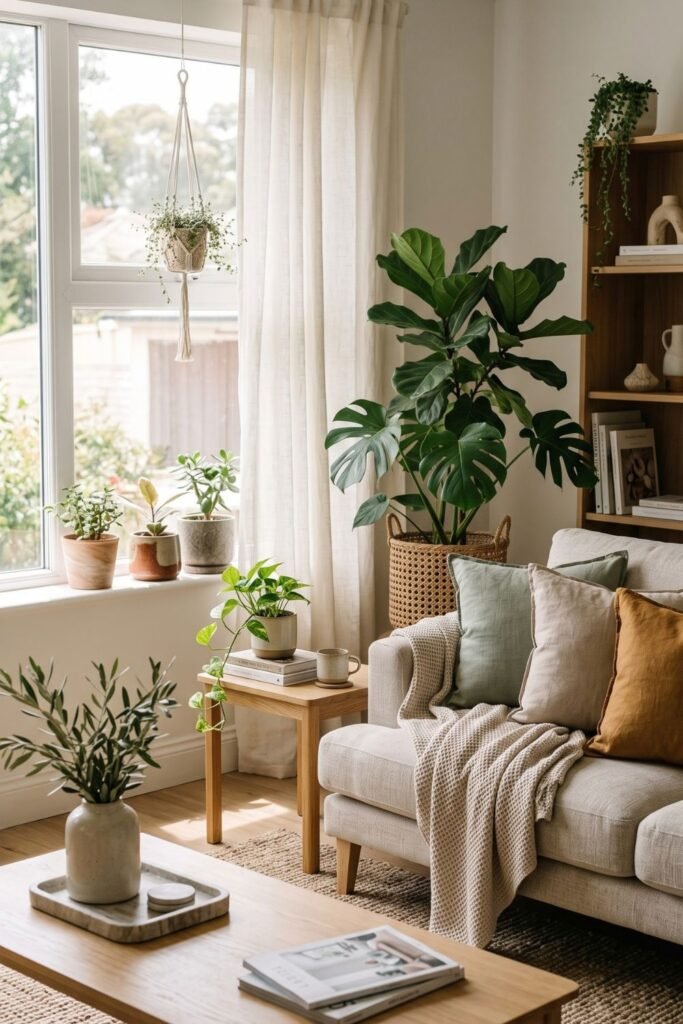
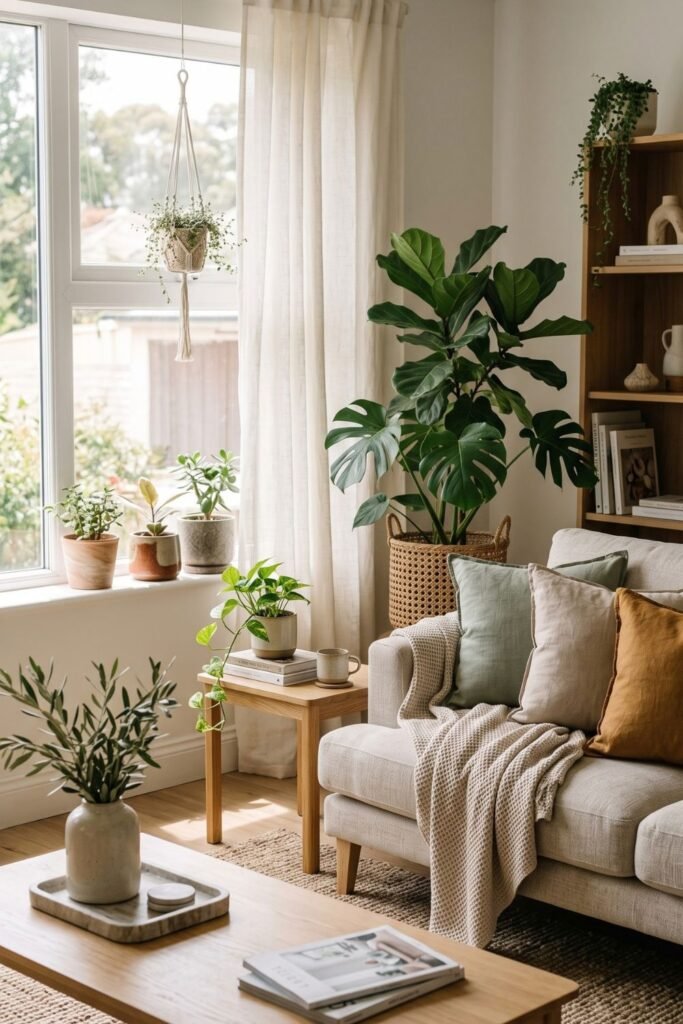
Plants add life, color, and texture without requiring a major redesign. A small potted plant on a side table, a leafy plant beside the sofa, or a few stems in a ceramic vase can soften straight furniture lines and bring the outdoors inside.
Choose plants that suit your available light and the time you can give them. If floor space is limited, try a windowsill planter or a small hanging planter where suitable. Combine greenery with wood, cotton, rattan, or stone finishes to create a natural look that feels calm and easy to maintain.
13. Use Lighting to Create a Relaxed Atmosphere
Lighting affects how spacious and comfortable a room feels. Instead of relying on a single bright ceiling light, combine it with a table lamp, a floor lamp, or a wall light. Multiple light sources create a softer atmosphere and help different parts of the room feel useful throughout the day.
Choose warm white bulbs for a welcoming evening glow, and keep window areas as open as possible during daylight hours. If your room is naturally dark, lightweight curtains can provide privacy without blocking too much sunlight.
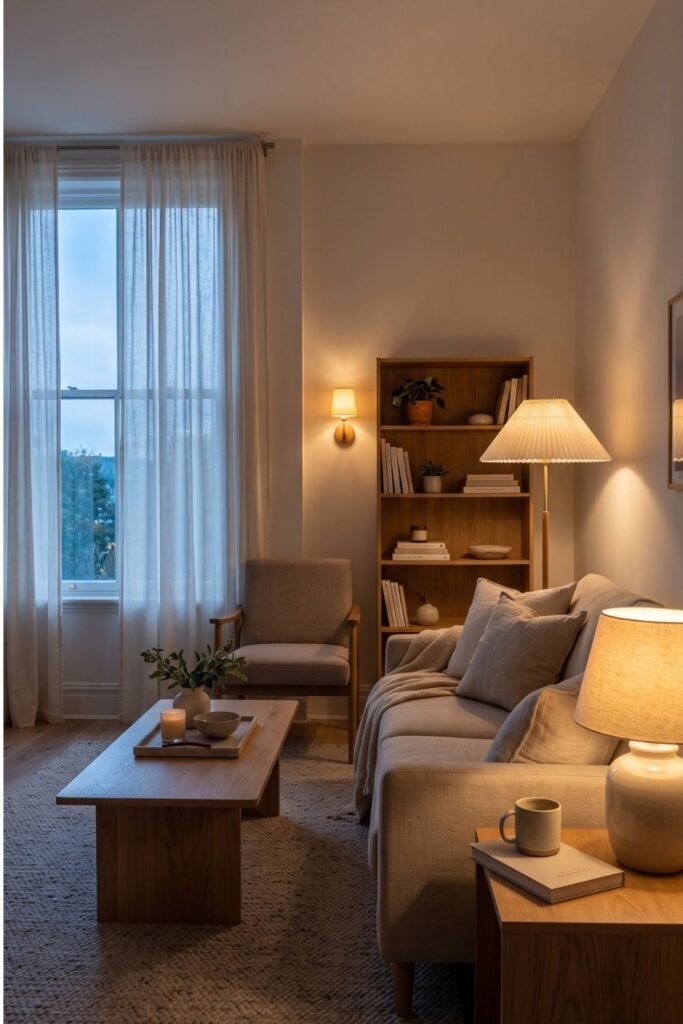
14. Choose Curtains That Make the Room Feel Taller
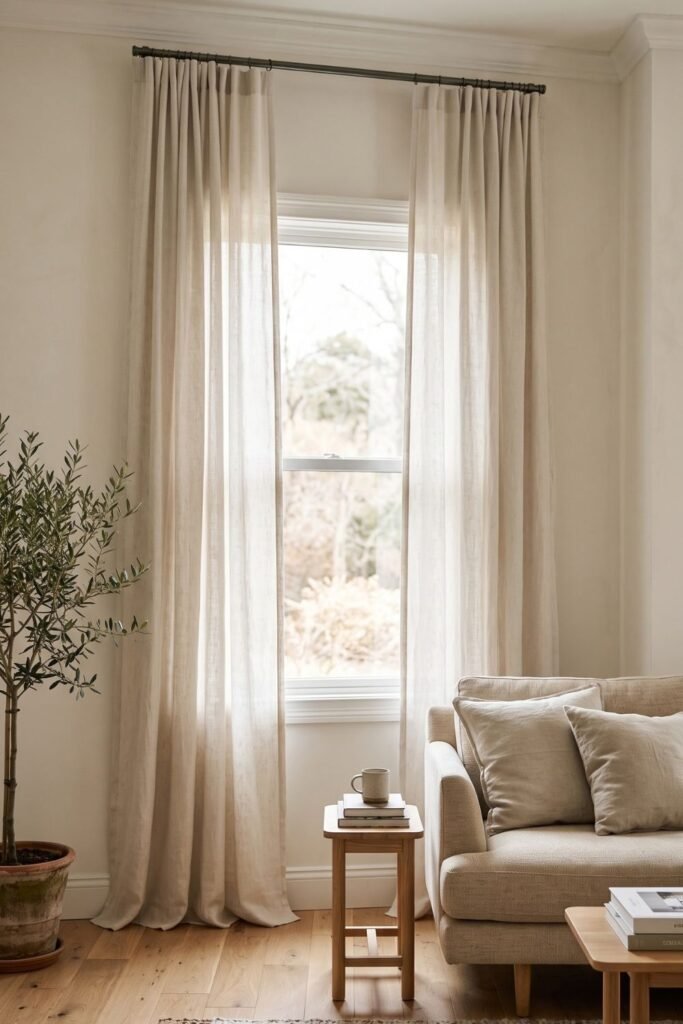
Curtains can change the appearance of a small room more than you might expect. Hanging the curtain rod slightly above the window frame and allowing the fabric to fall close to the floor can draw the eye upward. This creates a taller, more graceful appearance.
Choose lightweight linen or cotton curtains in a shade close to your wall color. Heavy patterns and thick fabrics may dominate a compact room, particularly when the windows are small. Keep the arrangement simple so daylight remains an important part of the design.
15. Personalize the Space with a Few Meaningful Details
Your living room should reflect the people who use it. Add personality with artwork, a favorite cushion, a handmade bowl, or a framed photograph. These small details make a neutral room feel individual without adding unnecessary clutter.
Try repeating one or two colors across your accessories to create a sense of connection. A muted green cushion might echo a plant, while a wooden frame could complement the coffee table. When the details relate to one another, the room feels thoughtfully arranged rather than overly decorated.
16. Make Your Small Living Room Work for You
The best Small living room ideas are the ones that suit your daily routine, your budget, and your personal taste. You do not need to replace every piece of furniture or follow a particular decorating trend to create a comfortable space. Start with the layout, remove what you no longer need, and introduce useful storage, soft lighting, and textures that make the room feel welcoming. Try one change at a time and notice how the room responds. A small living room can be a place to relax, entertain friends, read a book, and enjoy quiet evenings. With thoughtful choices, every corner can feel purposeful, comfortable, and distinctly yours.
Want to plan this out on paper? Grab my free Budget Decor Planner below Download